Where Farming Meets Biology

A look inside the system that makes Wilson Grains different.
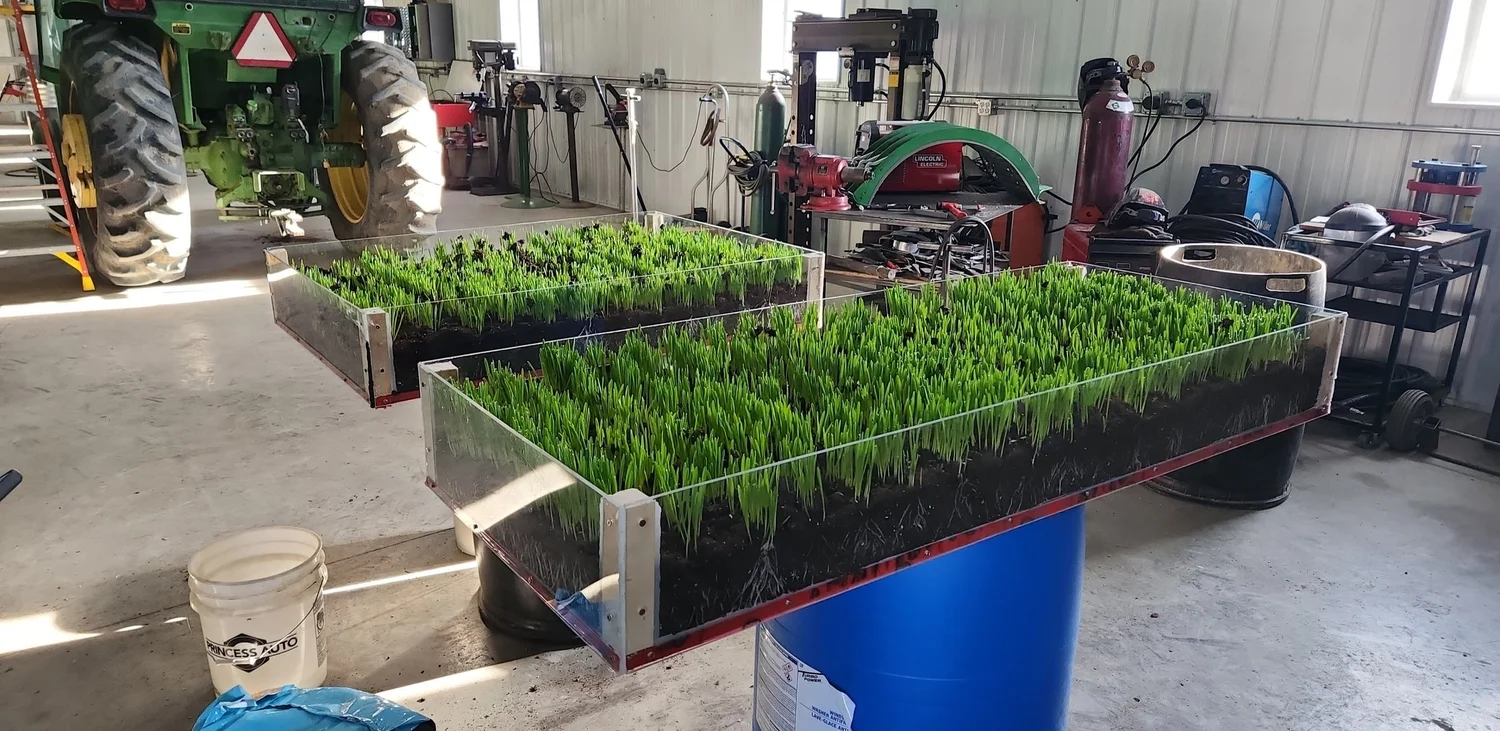
The first two boxes — where the biology program began
01 — Where It Started
Two Boxes in the Shop.
It started small. Two boxes. A hunch that the soil could do more if given the right biology. No playbook. No precedent in this region. Just Dexter paying attention to what the land was telling him.
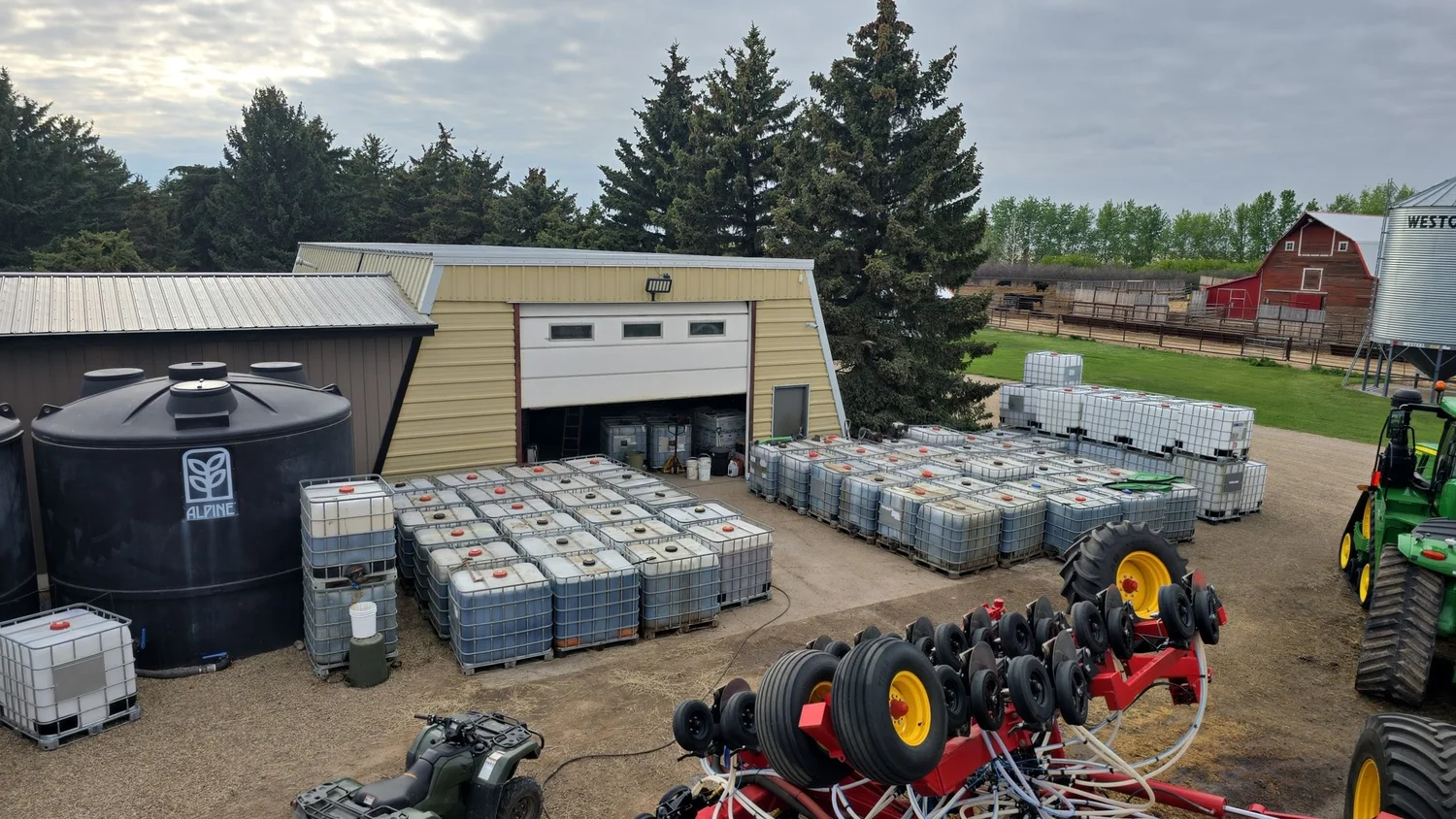
Rows of totes in the shop — the biology program at scale
02 — Scaled Up
From Two Boxes to a Full Production System.
What worked in two boxes now fills the shop. Mycorrhizal fungi grown, harvested, dried, and processed right here on the farm — enough to inoculate every acre, every season.
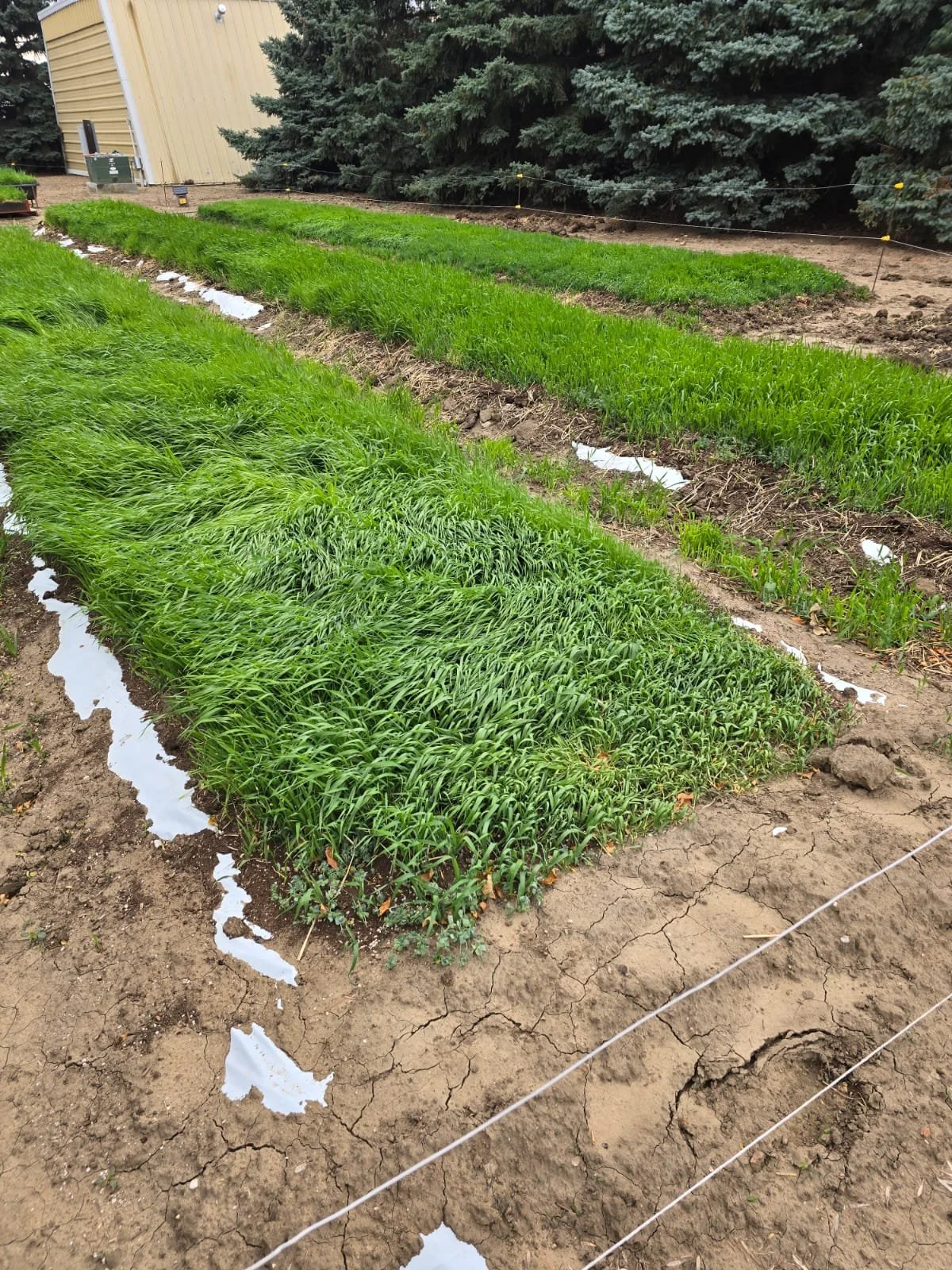
Biology program strips across the field at Wilson Grains
03 — Into the Field
Applied Across 18,000 Acres.
The homemade biological inoculant goes in-furrow at seeding — 3+ gallons per acre, applied to every crop. The strips tell the story visually. The biology does the rest.

04 — THE LIVING RESULT

This Is What Alive Looks Like.

Live microbial activity in Wilson Grains' homemade biological inoculant — captured up close. This isn't a product off a shelf. It was grown here, on this farm, for this soil.

Regenerative NeXus Presentation - Scottsdale, AZ

A deep dive into the regenerative system and results

In January 2026, Dexter was invited to present Wilson Grains biology program at an agricultural industry summit, hosted by Green Cover in Scottsdale, AZ — sharing 25 years of documented practice with an audience of farmers, researchers, and industry professionals.

The full presentation covers the biology system from the ground up — the mycorrhizal fungi program, the inoculant production process, input reduction data, drought performance, and the integrated cattle-grain system that makes it all work.

It's 25 minutes of the real thing. No marketing. Just Dexter explaining exactly how he farms and why.

Wilson Grains — 2023 Drought
22
bu / acre · Yellow Peas
Biology-first system · Zero-till · Mycorrhizal inoculants
Regional Average — 2023
5–7
bu / acre · Yellow Peas
Same season · Same region · Conventional systems
Input Reduction Over a Decade
Placeholder data — update with Sherry's records
120 96 72 48 24 0 lbs / acre 2014 2015 2016 2017 2018 2019 2020 2021 2022 2023 2024 30 lbs Zero ~100+
Nitrogen (lbs / acre)
Phosphorus (lbs / acre)
Fungicide application (dashed = trend, not volume)

* Placeholder data shown for illustrative purposes. Actual year-over-year records to be added from farm documentation.

Grain Quality Markers
Barley
14%
Protein — roughly 30% above conventional average
Barley
High 70s
TDN — total digestible nutrients
All Grain
Zero
Mycotoxins detected across documented harvests
All Grain
Zero
Ergot and nitrates — clean, traceable grain
Soil Organic Matter — Documented Trajectory
1.2–1.6%
At purchase
3–5.5%
Under biology program

When Wilson Grains purchases land, soil organic matter starts at 1.2–1.6% — the regional baseline for conventionally farmed prairie soil.

Under the biology program it builds to 3–5.5%. More water retention. More microbial activity. More resilience when drought hits.